- October 5, 2026
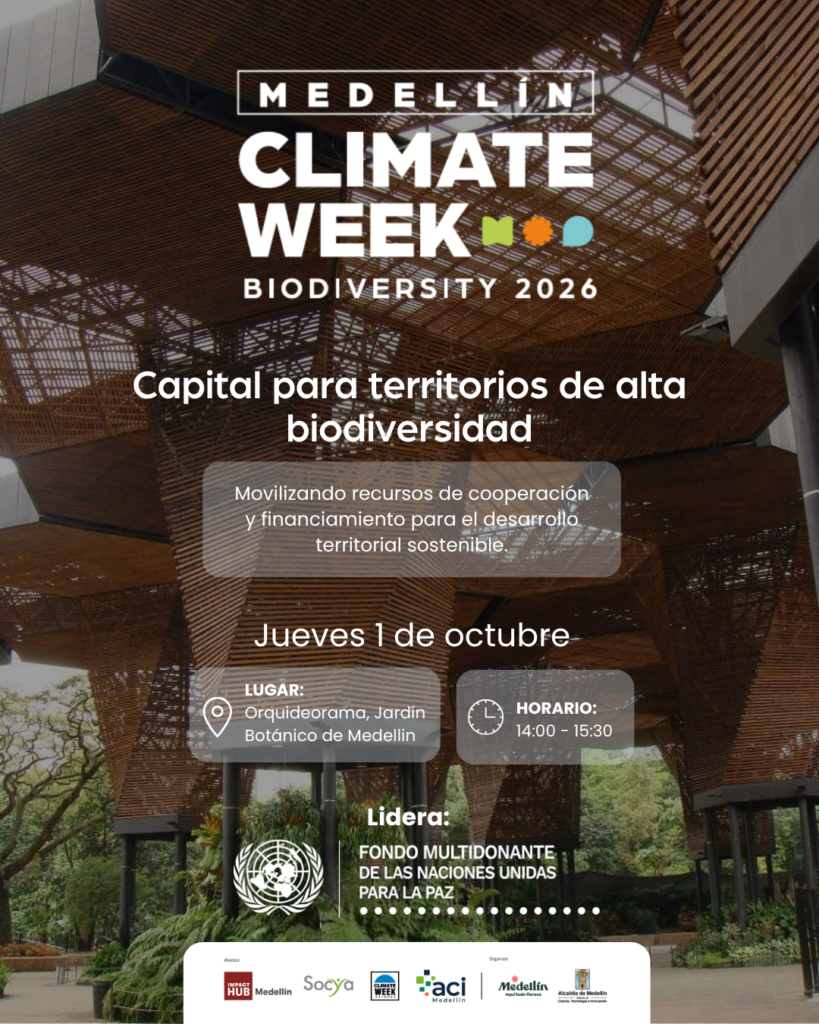
Mobilizing capital toward high-biodiversity areas requires much more than just financial resources. This was one of the main conclusions of the event “Capital for High-Biodiversity Territories,” held as part of Climate Week Medellín 2026—the first such event in Latin America—between September 28 and October 1. At the event, representatives from the United Nations, civil society organizations, local and international NGOs, financial institutions, and local stakeholders shared experiences on how to link cooperation, investment, and financing to support sustainable development – the 2030 Agenda.
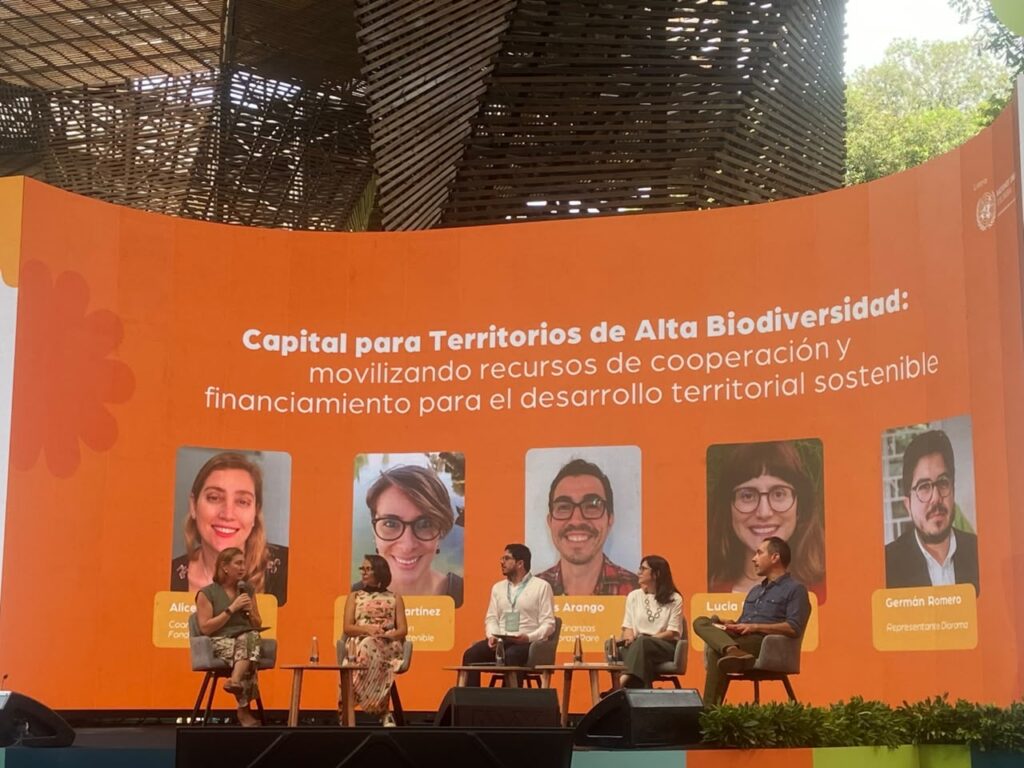
During the panel led by the Multi-Partner Trust Fund on October 1, the fourth day of Climate Week Medellín, the presentations highlighted how, through
innovative financial instruments for development, such as payments for results, blended finance, and impact investing They can open up new opportunities for conservation and territorial development. However, their ability to scale up depends on conditions that do not always receive sufficient attention: local governance, community capacity, information, measurement systems, and, above all, trust among those involved in the processes.
One of the most compelling conclusions was precisely that governance serves as the infrastructure for investment. Strengthening local organizations, building capacity, defining responsibilities, and establishing coordination mechanisms among communities, governments, international cooperation agencies, and investors are processes that require time and resources, and that are crucial for capital to flow into and remain in the region.
It also became clear that verifiable results serve as the common language between conservation and financing. For this reason, for pay-for-results mechanisms to be successful, clear objectives and measurable, adaptable indicators must be established, along with monitoring systems that demonstrate progress and build trust. This makes project preparation just as important as funding: producing information, structuring initiatives, defining verification mechanisms, and strengthening the capacities of local stakeholders are necessary investments for attracting resources to fund projects in the medium and long term.
This approach is directly linked to the work being carried out by the United Nations Multi-Partner Trust Fund for Peace in regions such as the Nariño Pacific and Catatumbo, where regional strategies seek to coordinate local capacities, institutions, cooperation, and development opportunities. The goal is not merely to fund projects, but to help create the conditions that will enable these regions to consolidate larger-scale, sustainable processes that will endure over time.
The experiences shared during the meeting also highlight the need to move beyond the logic of isolated projects. Territorial sustainability is built by connecting interventions, strengthening grassroots organizations, and coordinating different funding sources around priorities defined in collaboration with the territories. An intervention can build capacity; that capacity can enable the development of new initiatives; and the results achieved can, in turn, facilitate the flow of new resources with a long-term vision.
In this regard, international cooperation can serve as a catalyst: it funds enabling conditions, helps reduce risks, and generates evidence; subsequently, other sources of capital can help scale up solutions that have demonstrated results. The goal is not to replace some sources of funding with others, but rather to chart a course that allows for a gradual transition from cooperation to more diverse and sustainable investment models.
The main lesson, therefore, is simple yet strategic: mobilizing capital for biodiversity begins before the capital arrives. It begins by building trust, strengthening capacities, improving governance, generating information, and agreeing on outcomes with the people who live in those areas.
For the Fund, this outlook reinforces an initiative that is already underway: linking conservation, regional development, and new forms of financing, thereby creating the conditions for the environmental assets of regions such as the Nariño Pacific Coast and Catatumbo to become sustainable opportunities for their communities and processes capable of mobilizing resources over the long term.