



Transformation processes, economic reactivation and productive reconversion of PDET territories, PNIS and geographies of peace.

Improved perception of security and citizen confidence in institutions at the territorial level.

Constructive and transformative management of social conflict in the territories.

Strengthened territorial institutional capacities to allow for an integral local construction of the State, with a special focus on the most vulnerable populations, as well as on citizen participation.

Improved access of the population living in rural territories to formal and alternative justice mechanisms, in order to guarantee greater justice, equity, tranquility and a democratic social and political order in the territories.
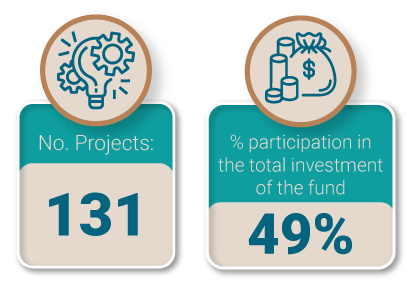
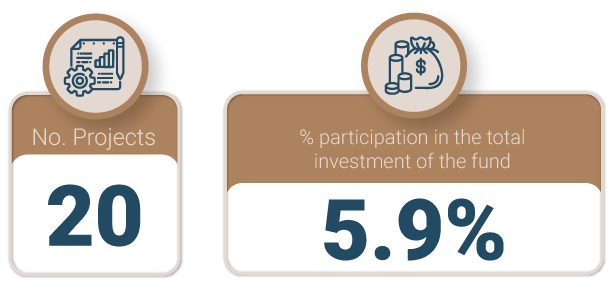

Supported territories to be free of threats from mines and explosive devices.

Support for the articulation of humanitarian demining policies and plans.

Supported territories to be free of threats from mines and explosive devices.

Promoting the guarantee of victims' rights to truth, justice, reparation and non-repetition, through their participation in the strengthened Justice for Peace System.


Supported the structuring, implementation and sustainability of reincorporation projects with a community focus on gender, environment, promoting reconciliation and economic development.

Providing comprehensive psychosocial accompaniment with a gender focus as a fundamental axis in the development of reincorporation.

Strengthened educational programs for job training, soft skills and economic inclusion.


Communicated in an effective and transparent manner the progress in implementation, the dynamics of peace building and the situations in the territories.

Strengthened the mechanisms established in the 2016 Peace Agreement (Point 6) for its monitoring and verification, in order to publicize progress and challenges in its implementation.


Support the early implementation of the partial agreements established at the peace talks with the ELN (National Liberation Army) and other armed actors, in order to build trust with the communities in the territories.

Support initiatives to reduce violence, promote peace building, trust, and participation of communities and civil society.

Strengthen institutional capacities and support the development of inputs for peace negotiations.
